The Journal
HubSpot insights, playbooks, and field notes
Practical guidance on implementation, automation, CMS, and getting real ROI from your HubSpot investment.


Latest articles
HubSpot Lead Scoring: Build a Model That Actually Works
How to build a HubSpot lead scoring model B2B sales reps actually trust — fit + engagement scores, decay, MQL…

HubSpot Reporting and Dashboards: A Practical Guide
HubSpot reporting and dashboards turn pipeline data into revenue decisions — but only if they’re built right. Most teams I…

HubSpot for SaaS Companies
Setting up HubSpot for a SaaS company? Step-by-step setup for MRR tracking, PQL workflows, renewals pipelines, churn automation, and product…

HubSpot Zapier Integration: Setup, Triggers, and Use Cases
HubSpot Zapier integration is the fastest way to connect HubSpot to the 7,000+ apps that don’t have a native integration…

HubSpot Onboarding Checklist: 30-Day Plan
A HubSpot onboarding checklist is the difference between a CRM that’s running your business in 60 days and one that’s…

HubSpot Cost Optimization: 7 Tactics
HubSpot cost optimization is one of the highest-ROI audits you can run on your CRM. Most teams can cut 20–35%…
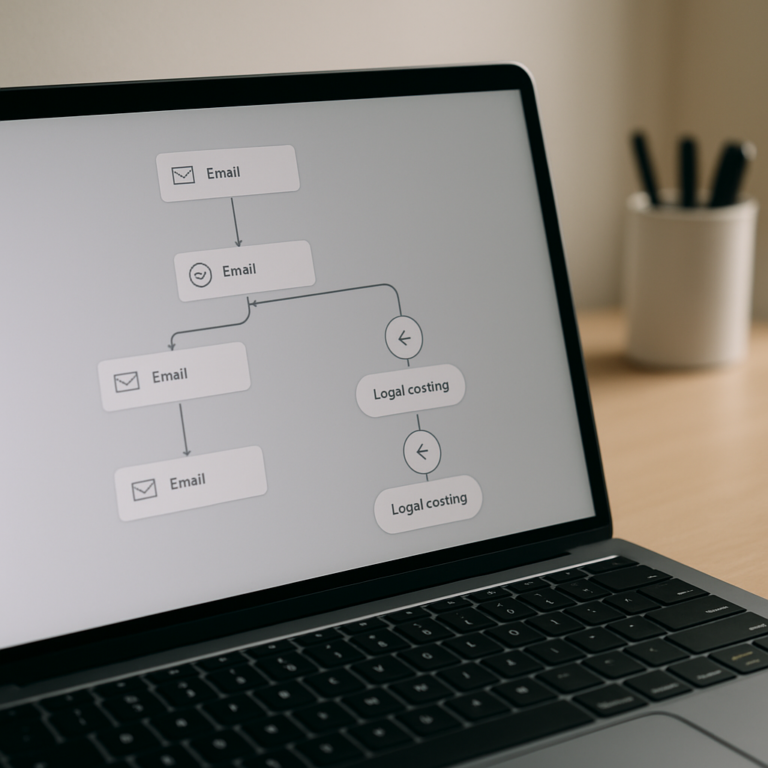
HubSpot Lead Nurturing Workflow Guide
A HubSpot lead nurturing workflow is the difference between a contact list that decays and a revenue engine that compounds.…

HubSpot Custom Properties Guide
HubSpot custom properties are the difference between a CRM that runs your business and a CRM that just stores names…

HubSpot Pipeline Automation: The Complete Setup Playbook
HubSpot pipeline automation is the difference between reps closing deals and reps updating deal stages. When it’s configured properly, the…

HubSpot Breeze vs ChatGPT: Which AI Should You Use?
HubSpot Breeze vs ChatGPT is the wrong question. Most teams should use both — Breeze for tasks that happen inside…

HubSpot vs Salesforce: Which CRM Should You Pick?
HubSpot vs Salesforce is the most common CRM decision I run into, and most mid-market teams pick wrong on their…
Glossary
HubSpot & RevOps terms, explained
Plain-English definitions for the terms that come up most in HubSpot and revenue operations work.
- RevOps (Revenue Operations)
- Aligning sales, marketing, and service operations — data, processes, and tooling — so revenue teams run on one trusted system.
- Lifecycle stage
- The standardized step a contact or company occupies in your funnel (lead, MQL, SQL, customer), used to route work and measure conversion.
- Deal pipeline & stages
- The ordered steps a deal moves through to close; well-designed stages mirror your real sales motion and each has a clear exit criterion.
- Data hygiene
- Keeping CRM records accurate, deduplicated, and complete so reports and automation can be trusted.
- Workflow
- HubSpot's automation builder — rules that trigger actions like routing leads, updating properties, or sending follow-ups without manual work.
- Lead routing
- Automatically assigning new leads to the right owner based on territory, product, or availability, so follow-up is fast.
- Attribution
- Connecting revenue back to the marketing and sales touches that influenced it, so you know what actually drives pipeline.
- MCP (Model Context Protocol)
- An open standard for securely connecting AI agents to tools and data like HubSpot, so AI can act on your systems reliably.
- Bucket of hours
- A flexible engagement model: buy a block of expert hours, use them across priorities, scale up or down, with every hour logged and no long-term contract.
- HubSpot Solutions Partner
- A HubSpot-certified agency vetted to implement, migrate, and optimize HubSpot for clients.